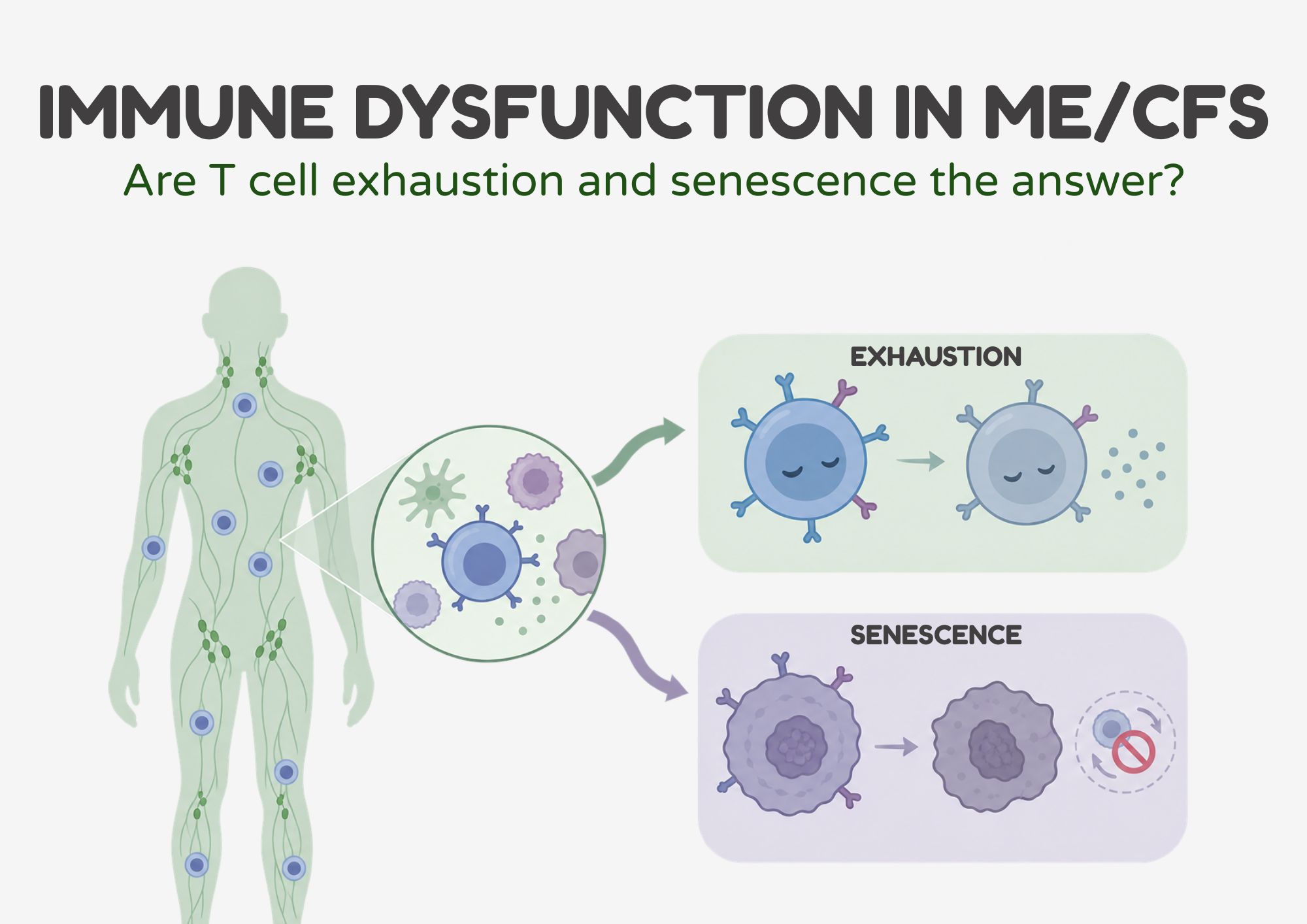
The immune system is dysregulated in ME/CFS
Myalgic Encephalomyelitis/Chronic Fatigue Syndrome (ME/CFS) is a debilitating and complex chronic disease, characterized by a wide range of symptoms including severe fatigue, post-exertional malaise (PEM), chronic widespread pain, sleep problems and cognitive impairments. Although the biological mechanisms underlying ME/CFS are not yet fully understood, researchers have discovered that several biological systems function differently in individuals with ME/CFS compared to healthy people.
One of these dysregulated systems is the immune system, which protects us against foreign and potentially harmful things in the outside world, such as injuries and infections. Many people suffering from ME/CFS report that their illness began following a viral infection. To this day, ME/CFS research has often explored the immune system in relatively small groups of people and has relied on broad, non-specific immune analyses. As a result, we still don’t really understand what is going wrong within the immune system in ME/CFS.
T cell exhaustion and senescence have revolutionized medicine
Within the immune system, various types of cells work together as a defense mechanism. Among these immune cells, T cells play a particularly important role in pain, since they can both increase and help protect against it. The activity of T cells is carefully regulated, but when this regulation goes wrong, they can become less active. My team and I focus on specific situations where this happens, such as during T cell exhaustion and T cell senescence. Why these two cell states specifically? Well, in patients with cancer and HIV they have been extensively studied, leading to breakthrough findings such as novel therapies against cancer. Since we know that the immune system plays a role in ME/CFS, I will take the information we have from those diseases and apply it to ME/CFS research, in search of new insights.
Exhausted T cells (“tired immune cells”) have lost their functional activity, often due to overactivation of the immune system, for example during chronic infections. Senescent T cells (“aged immune cells”) lose their ability to replicate, which means they don’t renew themselves anymore. T cell senescence is seen in older people, so it is a natural process associated with aging, but can also be caused by stress. Exhaustion and senescence share some characteristics, but an important distinction is that T cell exhaustion can be reversible, whereas senescence is considered irreversible. Distinguishing between the two cell states is therefore important, as therapies against them have revolutionized cancer and HIV research, and may offer better understanding of ME/CFS and its treatment.
Immune research in the laboratorium
I will analyse the blood of a well-characterized group of 60 women with ME/CFS and 60 healthy women. Their blood samples have been previously collected in our EPIME and MITAP studies (https://paininmotion.be/mitap), allowing me to study the activity of their T cells without any additional burden to patients. After isolating immune cells from their blood, I will look at whether T cell exhaustion and/or senescence are present in the ME/CFS group compared to healthy women. All participants have filled in detailed questionnaires on ME/CFS symptoms (fatigue, sleep, pain, etc.) and lifestyle factors, which will allow me to link laboratory results to symptoms of ME/CFS, such as pain.
Researchers analyse immune cells by looking at specific molecules, also called markers, on the surface and inside of cells. By looking at multiple markers, we get a detailed overview of how different types of cells are functioning. I will use a technique that is able to analyse many of these markers at once, on each T cell individually. This sensitive technique is called flow cytometry. Together with my team, I have designed our own combination of 16 markers, also called a flow cytometry panel, that detects T cell exhaustion and T cell senescence. At the PSIM26 congress, I presented this flow cytometry panel. The next step in our project is to finalize this panel in detail, so that I can later on use it on the blood samples of people with ME/CFS. By providing a detailed characterization of T cell exhaustion and T cell senescence, we may help better understand the biology behind ME/CFS and identify new biomarkers, ultimately contributing to an easier, faster and more accurate diagnosis of ME/CFS.
Yanthe Buntinx
2026Pain in Motion
References and further reading:
Van Campenhout J, Buntinx Y, Xiong HY, et al. Unravelling the Connection Between Energy Metabolism and Immune Senescence/Exhaustion in Patients with Myalgic Encephalomyelitis/Chronic Fatigue Syndrome. Biomolecules. 2025;15(3):357. doi:10.3390/biom15030357
Akbar AN, Henson SM. Are senescence and exhaustion intertwined or unrelated processes that compromise immunity?. Nat Rev Immunol. 2011;11(4):289-295. doi:10.1038/nri2959
Buntinx Y, Hendrix J, Wyns A, et al. Exploring Chronic Pain, Immune Dysfunction and Lifestyle: A Focus on T Cell Exhaustion and Senescence. Biomolecules. 2025;15(11):1601. doi:10.3390/biom15111601
Laumet G, Ma J, Robison AJ, Kumari S, et al. T Cells as an Emerging Target for Chronic Pain Therapy. Front Mol Neurosci. 2019;12:216. doi:10.3389/fnmol.2019.00216
Sharma P, Allison JP. The future of immune checkpoint therapy. Science. 2015;348(6230):56-61. doi:10.1126/science.aaa8172