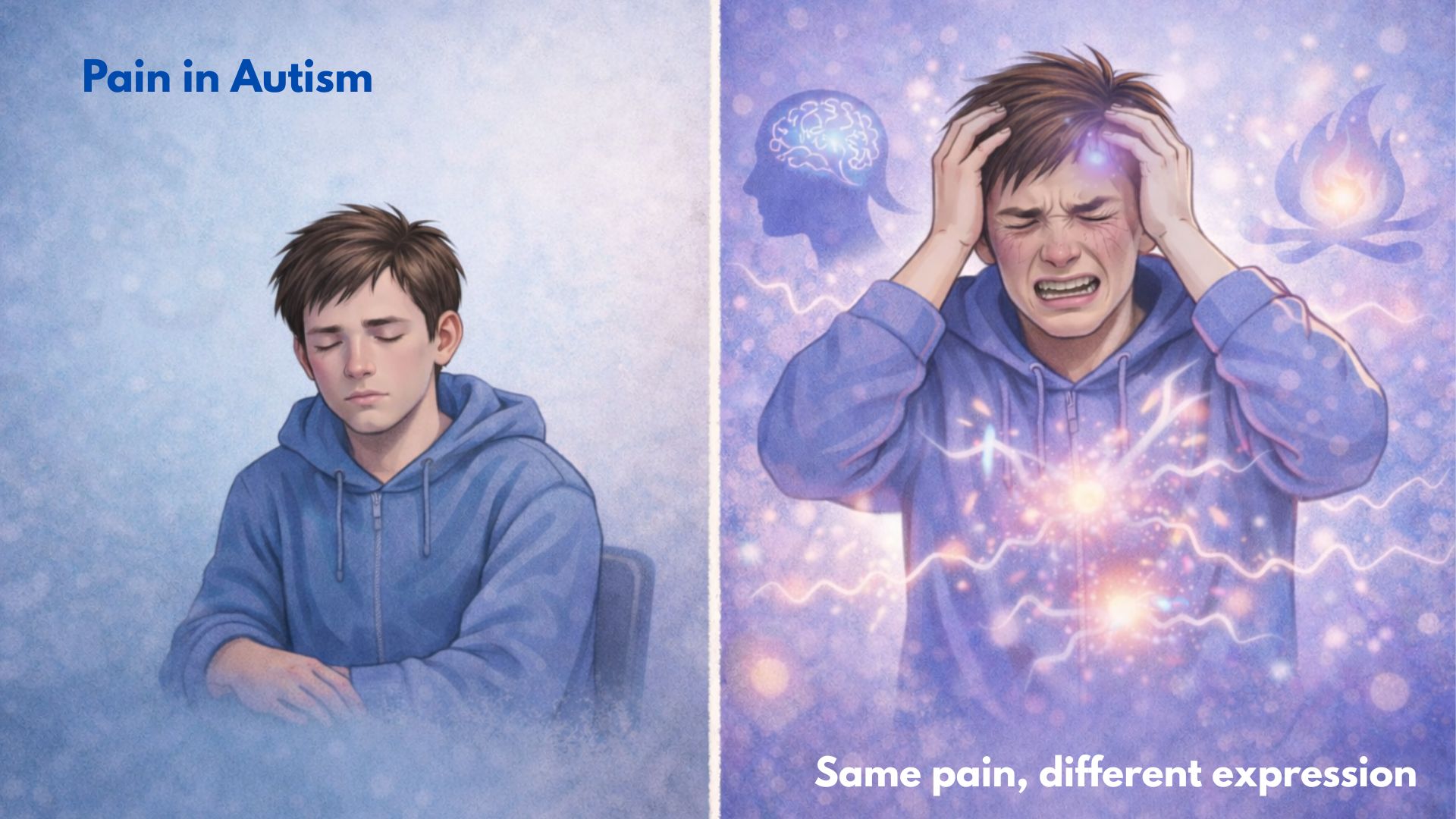
Pain on the Autism spectrum
Pain is usually assessed through questionnaires and standardized protocols. However, these approaches may not capture the variability in pain experiences among individuals with autism spectrum disorder (ASD) to the same extent as they do in neurotypical individuals (1). Differences in communication, sensory processing, and behavioral expression may influence how pain is perceived, expressed, and interpreted. Consequently, pain in autistic individuals is often underrecognized and misunderstood.
Autism and sensory processing
ASD refers to a complex neurodevelopmental condition characterized by impairments in social interactions and communication, repetitive and restricted patterns, behaviors, activities and interests (2). The term spectrum in ASD reflects the wide diversity in how autism may present itself. A notable characteristic of ASD is altered sensory perception, which is highly prevalent among autistic individuals (2, 3). Some individuals may experience hypersensitivity to stimuli such as sounds, lights, or textures which may lead to strong aversive reactions. Others may show hyposensitivity, which can present itself as reduced behavioral responses to pain or temperature (2).
Pain in Autism
At first, autism was associated mostly with reduced pain sensitivity. This assumption was partly supported by the DSM-5 descriptions that mention that autistic individuals may show limited behavioral responses to discomfort or injuries (2). However, recent research highlights this assumption as too simplistic. Studies indicate that autistic individuals experience comparable or even heightened pain sensitivity, while expressing pain in atypical ways (4). For instance, autistic individuals with chronic pain may show their pain through self-injurious behaviors, withdrawal or laughter instead of verbally reporting pain (1). Importantly, the heterogeneous nature of autism should always be considered, as pain experiences and expressions can vary widely between individuals.
Chronic pain in autism
Beyond differences in pain sensitivity, research suggests that chronic pain occurs more frequently in autistic individuals. A population-based study found that 15.6% of autistic children reported chronic pain, compared to 8.2% in neurotypical children (5). In addition, central sensitivity syndromes, including chronic fatigue, migraines, and irritable bowel syndrome may occur relatively more often among autistic populations (6). These conditions are a result of altered processing of sensory signals and are often associated with persistent pain. Moreover, chronic stress, sensory overload, and difficulties in everyday life may contribute to the development or maintenance of pain symptoms. In clinical practice, it is sometimes observed that individuals initially present with chronic pain complaints, while autism is recognized and diagnosed later.
Challenges and implications for clinical practice
Recognizing pain in autistic individuals or recognizing autism in patients presenting chronic pain, can present challenges in clinical practice. Given the complexity and variability of pain expression in autistic individuals, clinicians are encouraged to take on a personalized approach (7). Recognizing different behavioral cues, understanding sensory sensitivity, as well as observing patterns can help to provide effective care.
Autistic individuals may also struggle with accessing healthcare due to challenges with communication difficulties, and limited autism awareness among health care professionals (8). Therefore, raising awareness among healthcare providers about autism and its influence on pain perception and expression, may improve early recognition, prevent chronic pain, and enhance quality of life.
Blogpost by: Noïah-Faye Andante Hoelen; Maastricht University Master Mental Health student and research intern at Pain in Motion research group
2026Pain in Motion
References and further reading:
1. Garriga-Cazorla H, Roman-Juan J, Martí L, Solé E, Martínez-Leal R, Miró J. Chronic pain in autism. A systematic review. Clin J Pain. 2025;41(8). https://doi.org/10.1097/AJP.0000000000001296
2. American Psychiatric Association. Diagnostic and statistical manual of mental disorders. 5th ed. Washington (DC): American Psychiatric Publishing; 2013. https://doi.org/10.1176/appi.books.9780890425596
3. Marco EJ, Hinkley LB, Hill SS, Nagarajan SS. Sensory processing in autism: A review of neurophysiologic findings. Pediatr Res. 2011;69:48–54. https://doi.org/10.1203/PDR.0b013e3182130c54
4. Hoffman T, Bar-Shalita T, Granovsky Y, Gal E, Kalingel-Levi M, Dori Y, et al. Indifference or hypersensitivity? Solving the riddle of the pain profile in individuals with autism. Pain. 2023;164(4):791–803. https://doi.org/10.1097/j.pain.0000000000002767
5. Whitney DG, Shapiro DN. National prevalence of pain among children and adolescents with autism spectrum disorders. JAMA Pediatr. 2019;173(12):1203–5. https://doi.org/10.1001/jamapediatrics.2019.3826
6. Grant S, Norton S, Weiland RF, et al. Autism and chronic ill health: An observational study of symptoms and diagnoses of central sensitivity syndromes in autistic adults. Mol Autism. 2022;13:7. https://doi.org/10.1186/s13229-022-00486-6
7. Salabura C, Sourty A, Bat-Pitault F, Regnery K, Mayen S, Colson S. Pain assessment for children and adolescents with autism spectrum disorders: A systematic review. Encephale. 2025;51(1):87–94. https://doi.org/10.1016/j.encep.2024.04.007
8. Hampton S, Allison C, Baron-Cohen S, Holt R. Autistic people’s perinatal experiences I: A survey of pregnancy experiences. J Autism Dev Disord. 2024;54(1):211–23. https://doi.org/10.1007/s10803-022-05754-1